
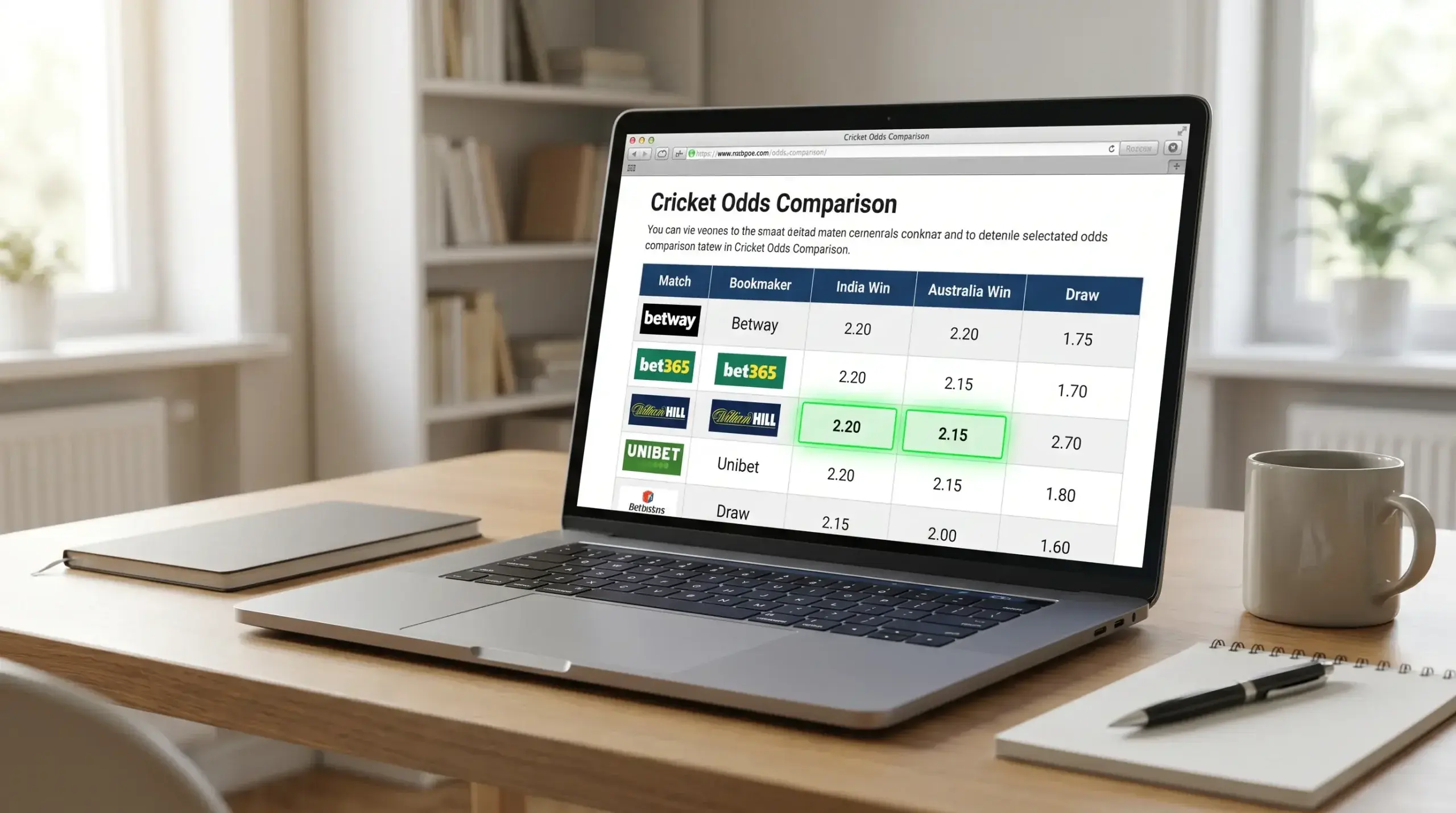

Small Differences in Odds, Significant Differences in Returns
I once placed identical match winner bets on the same cricket fixture at two different bookmakers. One offered 2.10, the other 2.25. The bet won, and the difference was £1.50 on a £10 stake. Trivial, right? Then I ran the numbers across a full IPL season — 74 matches, one bet per match. Over that volume, the cumulative difference between consistently getting 2.10 and consistently getting 2.25 was over £100 on the same results. That’s when I started taking odds comparison seriously.
William Hill commands 37.83% of PPC clicks in UK sports betting, with bet365 at 16.2%. Those market share figures tell you where most bettors end up, but market share doesn’t correlate with best odds. The bookmaker with the most customers isn’t necessarily the one offering the most competitive price on tonight’s T20 match winner. Getting the best odds requires active comparison, and the effort compounds into measurable value over a season.
Match winner is the most liquid cricket market, which means it’s also the most competitively priced. The overround is tighter than on player markets or specials, and the differences between bookmakers are smaller — but “smaller” still means material over hundreds of bets.
How to Use Odds Comparison Tools
Odds comparison sites aggregate prices from multiple bookmakers and display them side by side for each market. For cricket match winner, these tools show you which operator is offering the highest back price on each team. The best tools update in real time and cover in-play as well as pre-match odds.
I use comparison tools as my starting point, not my final destination. The prices displayed are often slightly delayed — by the time you click through to the bookmaker’s site, the odds may have moved, especially close to the toss or during team news announcements. I treat comparison data as directional: it tells me which bookmaker is likely offering the best price, and I verify at the point of placing the bet.
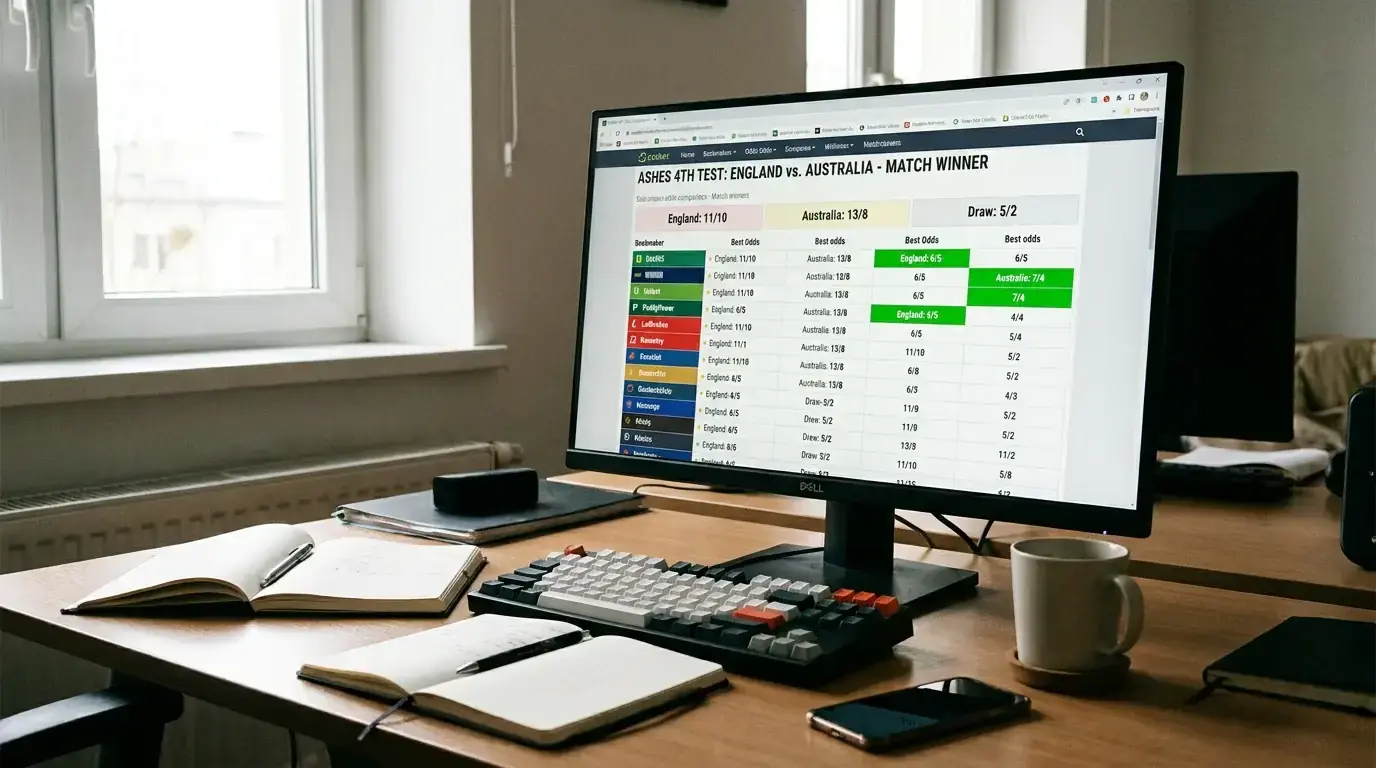
Not all comparison sites cover every UKGC-licensed operator. Some have commercial agreements that prioritise certain bookmakers in their listings. I cross-reference at least two comparison tools and also check exchange prices on Betfair as a benchmark for what the “true” odds might be on any given cricket match.
Spotting Overround and Narrow-Margin Markets
The overround — sometimes called the “vig” or “juice” — is the bookmaker’s built-in margin. In a perfectly fair two-way market, the implied probabilities of both outcomes sum to 100%. In practice, they sum to 103-108%, with the excess representing the bookmaker’s profit margin. A lower overround means better value for the bettor.
For cricket match winner in T20 fixtures, overrounds typically range from 3% to 7% across major UK bookmakers. The tightest margins appear on the highest-profile matches — IPL finals, England internationals, Ashes Tests — where competition between operators and high liquidity compress the overround. Lower-profile fixtures carry wider margins because fewer bettors shop around for the best price.
I calculate the overround on every match I’m considering betting on. The formula is simple: convert each set of odds to implied probability and add them up. If one bookmaker offers a total overround of 103.5% and another offers 106%, the first is giving you meaningfully better value. Over time, consistently betting with the lowest-margin operator is one of the simplest ways to improve your long-term returns.

When Match Winner Odds Offer the Best Value
Live betting accounts for approximately 55-60% of all cricket wagers placed in the UK, but pre-match odds sometimes offer better value because the market hasn’t yet reacted to late-breaking information. The window between team sheet release and the toss — usually 30-60 minutes before the match — is where I’ve found the most consistent value in match winner markets.
Once the toss is completed, odds move rapidly. A team winning the toss and choosing to bat on a flat pitch can see their price shorten by 10-15% in minutes. If you’ve already placed your bet based on conditions analysis and team news, you’ve locked in a price that the post-toss market can’t match. Timing matters as much as selection in match winner betting.

Exchange markets on Betfair often lead bookmaker pricing in the minutes before a match. Professional exchange traders react to team news faster than bookmaker pricing algorithms, so exchange odds can preview the direction bookmaker odds are about to move. I use exchange prices as a leading indicator: if the exchange price shortens before the bookmaker has adjusted, I back at the bookmaker’s stale price while it still offers value.
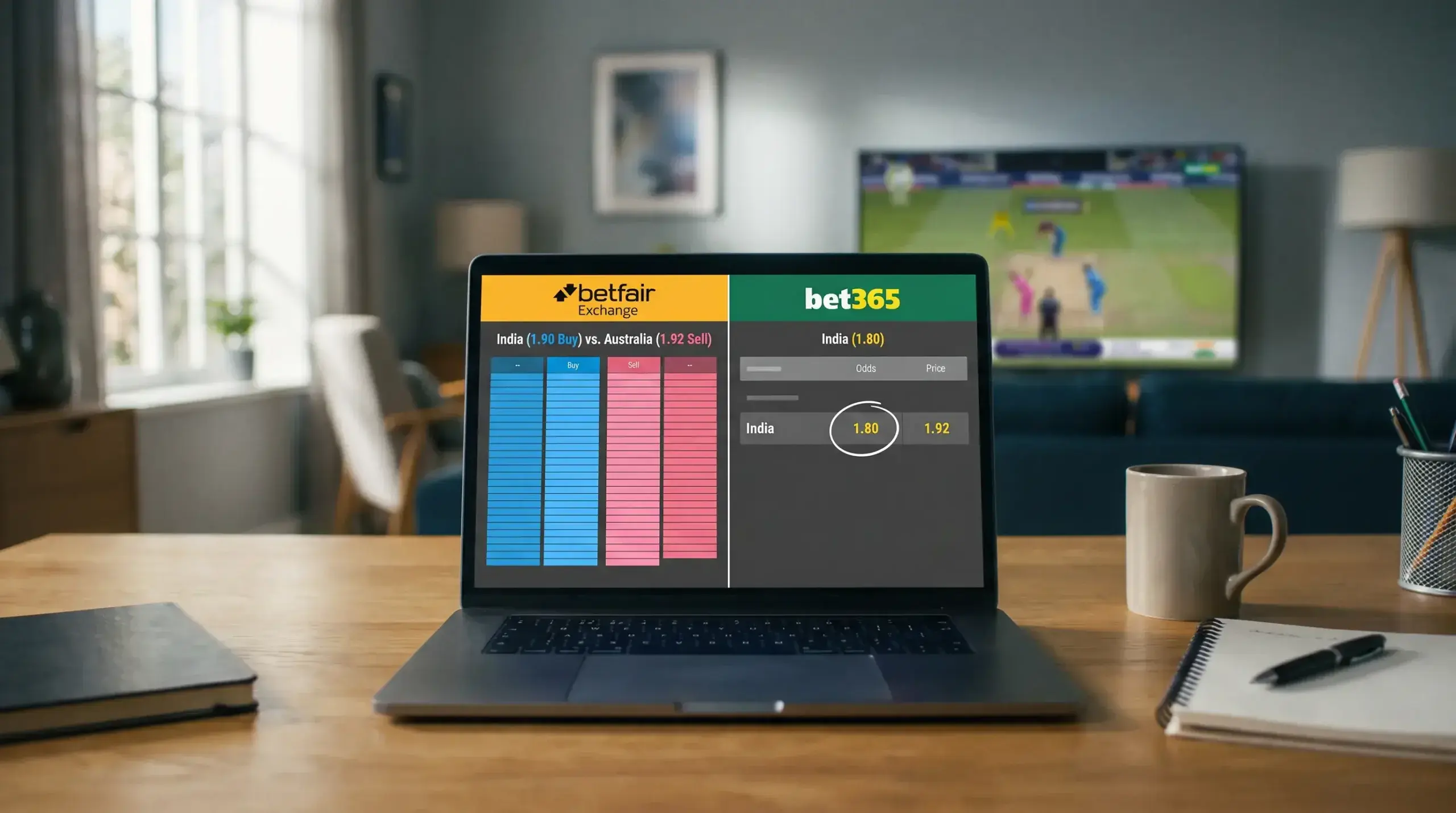
Bookmaker vs Exchange Odds for Match Winner
Exchange odds are consistently tighter than bookmaker odds on cricket match winner because the exchange doesn’t carry an overround — the margin comes from commission on winning bets. A bookmaker might offer 1.85 on a team, while the exchange has the same team available to back at 1.95. After 5% commission, the effective exchange price is approximately 1.90, which still beats the bookmaker.
The trade-off is liquidity and convenience. Bookmaker bets are guaranteed to be accepted at the displayed price. Exchange bets need to be matched by another user, and on lower-profile cricket matches, your bet might sit unmatched. For high-liquidity fixtures — IPL, England T20s, major events — the exchange is almost always the better option for match winner bets. For county cricket or bilateral series, the bookmaker offers certainty that the exchange can’t always provide.
I use a hybrid approach: exchange for high-profile match winners where liquidity is deep, bookmaker for lower-profile fixtures where convenience matters. Both accounts are with UKGC-regulated operators, both offer responsible gambling tools, and both contribute to a systematic approach where the goal is extracting the best available price on every bet, not loyalty to a single operator.