


Why the UKGC Licence Is Your First Filter
A few years back, a reader asked me to review a cricket betting site offering absurdly generous welcome bonuses and odds that undercut every licensed operator. It took me about ninety seconds to check the UKGC register and confirm what I suspected: the site held no UK licence. The reader had already deposited £200. That money was gone, and there was no regulatory body to contact for help.
Forty-seven percent of UK adults participate in some form of gambling, and the Gambling Commission exists to ensure those activities take place within a regulated framework. For cricket bettors, the UKGC licence is not a quality award or a recommendation — it’s a minimum threshold for consumer protection. Every operator accepting bets from UK customers must hold one, and every bettor should verify it before depositing a single pound.
The licence system protects your funds, your data, and your right to fair treatment. Without it, you’re relying on nothing more than a website’s promises, and in my experience, those promises evaporate the moment a dispute arises.
What the Gambling Commission Actually Regulates
The Gambling Commission regulates operators, not individual bets. Its remit covers licensing, compliance enforcement, consumer protection, and anti-money laundering standards. Andrew Rhodes, when serving as CEO of the Gambling Commission, highlighted the extra investments the Commission made in areas like illegal gambling, criminal investigations, and data capabilities — investments funded from excess reserves that face ongoing budget constraints.
For cricket bettors, the practical implications of UKGC regulation include segregated customer funds — your money is held separately from the operator’s business accounts. It also means mandatory responsible gambling tools, transparent terms and conditions, and a formal complaints process. If you have a dispute with a UKGC-licensed operator, you can escalate to an independent Alternative Dispute Resolution provider at no cost.
What the UKGC doesn’t do is guarantee you’ll win, assess the fairness of individual odds, or endorse specific operators. The licence confirms regulatory compliance, not commercial quality. Two operators can both hold valid UKGC licences while offering vastly different cricket market coverage, odds quality, and user experience.

LCCP Conditions: What Operators Must Do
LCCP — Licence Conditions and Codes of Practice — is the detailed framework that UKGC-licensed operators must follow. It covers everything from how customer identity is verified to how promotional terms must be displayed. For cricket bettors, several LCCP conditions have direct relevance.
Operators must implement age verification before allowing any gambling activity. This isn’t optional or delayed — verification must be completed before the first bet is placed. Deposit limits, cooling-off periods, and self-exclusion tools must be accessible from the customer’s account settings, not buried in a help section three menus deep.
Marketing communications must be clear, fair, and not misleading. A cricket free bet offer must state its wagering requirements, minimum odds, time limits, and any market restrictions in the promotional material itself, not just in a linked terms page. The LCCP also requires operators to monitor customer activity for signs of problem gambling and to intervene when patterns suggest harm — a duty that applies regardless of whether the customer requests help.
Transparency on settlement rules is another LCCP requirement. When you bet on a cricket match that is abandoned, shortened by rain, or decided by DLS, the operator must have clear, pre-published rules explaining how that bet is settled. These rules must be available before you place the bet, not applied retrospectively. I’ve had disputes resolved in my favour specifically because the operator’s own published rules contradicted the settlement they initially applied — and the LCCP framework gave me the grounds to challenge it.

How to Verify a Bookmaker’s UKGC Licence
Verification takes less than a minute. Every UKGC-licensed operator displays its licence number in the footer of its website, typically alongside the Gambling Commission logo. That number can be cross-referenced on the Gambling Commission’s public register, which is searchable by operator name, licence number, or company name.
The public register shows the operator’s licence status (active, suspended, or revoked), the types of gambling it is licensed to provide (remote betting, remote casino, etc.), and any regulatory actions taken against it. I check this register whenever I encounter a new cricket betting site, even if the site appears legitimate. Logo placement can be faked; the public register cannot.
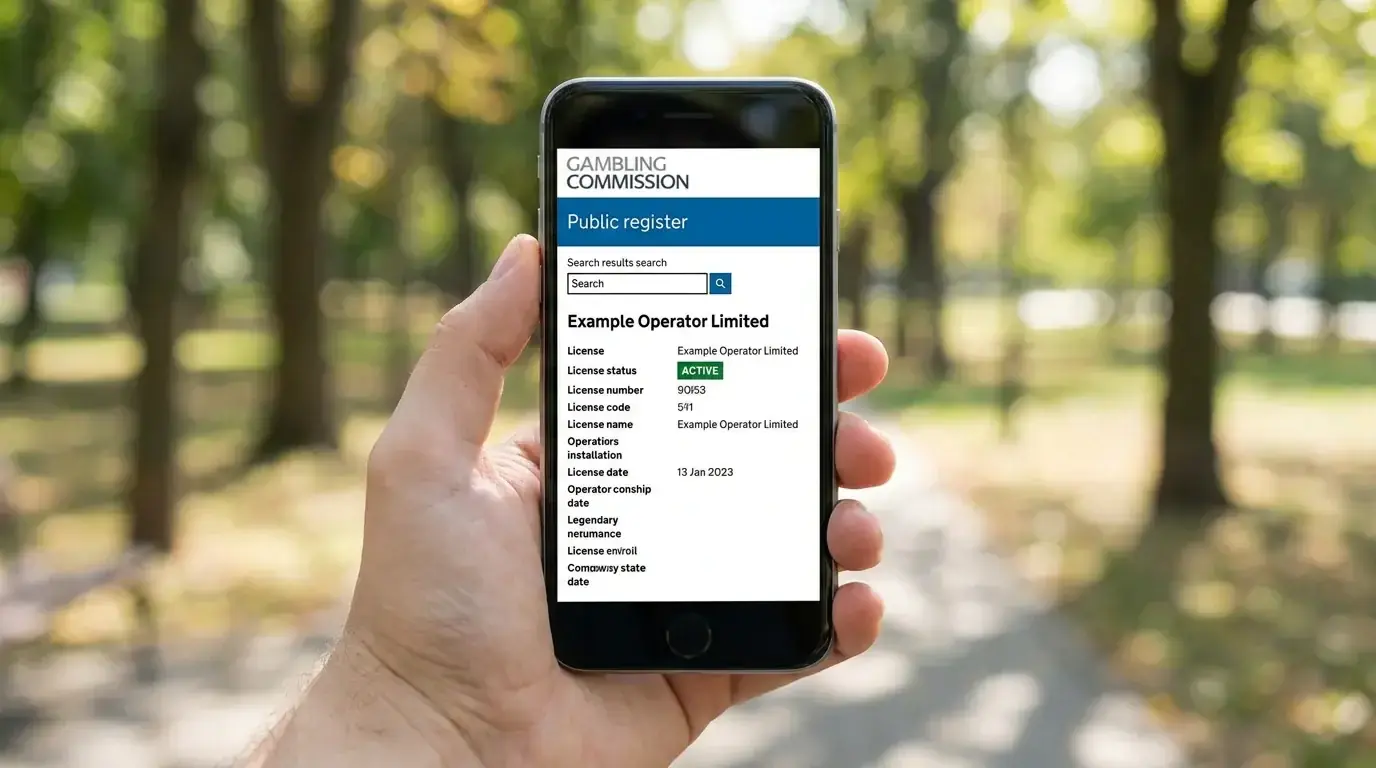
Mobile apps add a complication. An app downloaded from the Apple App Store or Google Play Store has passed platform review, but platform review does not verify UKGC licensing. A betting app can be available in UK app stores without holding a UKGC licence if it targets customers in other jurisdictions. Always verify the licence independently, regardless of where you download the app.
Risks of Using Unlicensed Offshore Operators
Kevin Harrington, UKI CEO of Flutter Entertainment, warned that tax increases would hand a win to illegal, unlicensed gambling operators who become more competitive overnight — operators who don’t pay tax and don’t invest in safer gambling. The Remote Gaming Duty increase to 40% has indeed compressed licensed operators’ margins, making offshore alternatives look more attractive on the surface.
The risks of using unlicensed operators are concrete, not theoretical. Your deposits are not held in segregated accounts. If the operator goes bankrupt, your funds disappear. There is no formal complaints mechanism, no ADR service, and no regulatory body you can turn to. Withdrawal delays — or outright refusal to pay winnings — are common, and your only recourse is a cross-border legal action that costs more than most betting balances.

Data security is another risk. UKGC-licensed operators must comply with UK data protection law. Unlicensed offshore sites are under no such obligation. Your personal information, banking details, and identification documents could be stored, sold, or compromised without any legal consequence for the operator.
I understand the appeal of better odds or bigger bonuses at unlicensed sites. But after eight years in this space, I have yet to encounter a single bettor who moved to an offshore operator and didn’t eventually regret it. The short-term pricing advantage is never worth the long-term risk to your money and your data.