
Women’s Cricket Betting: From Niche to Mainstream
Three years ago, finding a women’s cricket betting market at a UK bookmaker required persistence and patience. Today I can pull up match winner, top batsman, top bowler, and total runs markets for a Women’s Hundred fixture as easily as I’d find them for a men’s IPL match. The shift has been rapid, and it reflects a broader transformation in how the sport is consumed, broadcast, and monetised.
The TV audience gap between men’s and women’s The Hundred shrank by approximately 60% between 2021 and 2024. In 2025, the women’s Hundred final drew a record crowd of 22,542 — numbers that rival some men’s county cricket fixtures. This isn’t an emerging trend; it’s an established growth curve that bookmakers can no longer treat as peripheral.
For bettors, women’s cricket offers something the men’s game increasingly doesn’t: a market where dedicated research delivers a measurable advantage. The data landscape is thinner, public analysis is sparser, and bookmaker pricing models are less refined. If you’re willing to invest the analytical effort, the market rewards it.
Markets Offered for Women’s Cricket in the UK
Market coverage for women’s cricket has expanded significantly, though it still lags behind the men’s game. For international fixtures and major franchise tournaments — The Hundred, the Women’s Big Bash, and Women’s T20 internationals — UK bookmakers typically offer match winner, top batsman, top bowler, total runs over/under, and innings runs.
Player performance thresholds are less commonly available than in men’s cricket, largely because the data sets used to calibrate lines are smaller. When they are offered, the thresholds tend to be lower. A “top batsman to score 40+ runs” market in the men’s game might appear as “top batsman to score 30+ runs” in the women’s equivalent. Those adjusted thresholds reflect the different scoring environments, not a quality judgement.

In-play markets for women’s cricket are available for televised fixtures but are typically restricted to match winner and total runs. The ball-by-ball micro-markets that dominate men’s T20 in-play betting — next over runs, method of next dismissal — are less common for women’s matches because the data feeds and pricing models are still developing. This is changing season by season, and The Hundred has been the main catalyst for that expansion.
Audience and Betting Volume Growth
Sky Sports’ audience for The Hundred, which includes both men’s and women’s matches, grew 38% in 2025. BBC Sport recorded 2.2 million online views for the competition, up from 1.6 million the previous year. The women’s competition has driven a meaningful share of that growth — the decision to broadcast women’s matches in standalone slots, rather than as curtain-raisers, has given them their own audience identity.
The broader pattern in women’s sport mirrors what’s happening in cricket. The surge in popularity of women’s football is well documented, and betting interest has followed that audience growth. Women’s cricket is tracking the same trajectory, with a time lag of roughly two to three years. Bookmakers who invested early in women’s football market coverage are now applying the same playbook to cricket.

Betting volume data for women’s cricket specifically is not publicly broken down by most operators, but the expansion of market types is a reliable proxy. Bookmakers don’t add markets that nobody bets on — the cost of pricing and monitoring those markets means they only appear when demand justifies them. The fact that women’s cricket markets have expanded from match winner only to a full suite of options tells you what the volume trajectory looks like.
Key Women’s Tournaments for UK Bettors
The Women’s Hundred is the most accessible women’s cricket betting event for UK punters. Matches are played at familiar grounds during the British summer, broadcast on free-to-air television, and feature squads with a mix of English internationals and overseas stars. The combination of domestic convenience, broadcast access, and competitive quality makes it the ideal entry point.
Women’s T20 Internationals featuring England are covered by all major UK bookmakers when played at home. Away series — particularly tours to Australia and India — receive varying levels of coverage depending on the broadcast arrangement and time zone. The Women’s T20 World Cup, held every two years, attracts the deepest market coverage of any women’s cricket event.
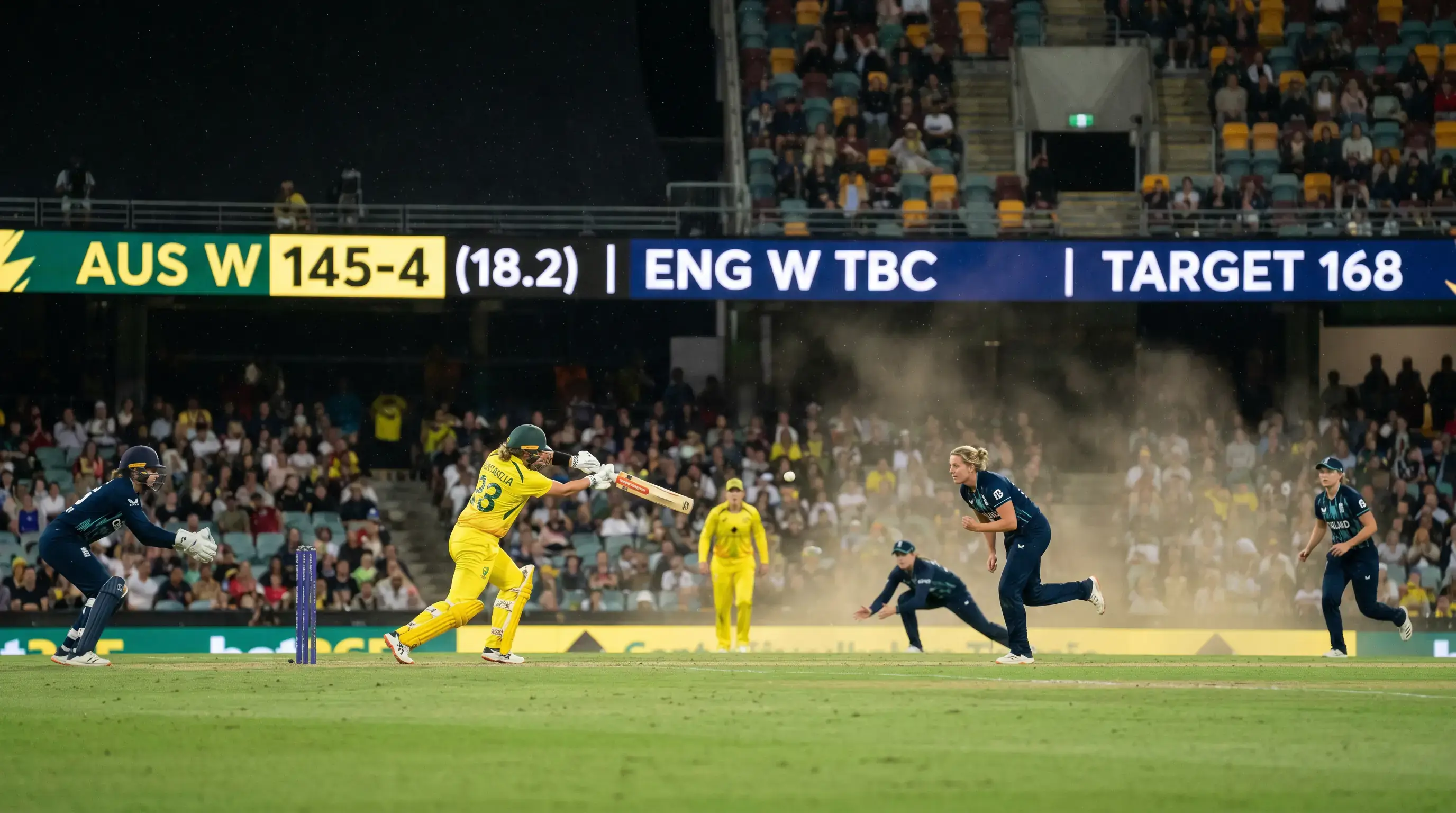
The Women’s Big Bash League in Australia runs during the UK winter and provides off-season betting opportunities. Coverage from UK bookmakers has improved year on year, though it remains less comprehensive than the men’s Big Bash. If you follow the WBBL closely and build your own performance models, you’re operating in a market where the bookmaker’s data advantage is smaller than usual.
Finding an Edge in a Less-Saturated Market
The analytical edge in women’s cricket betting comes from information asymmetry. In men’s cricket, tens of thousands of bettors analyse every IPL match, every Ashes Test, every major T20 fixture. Bookmakers’ odds reflect that collective analytical pressure. In women’s cricket, the number of bettors doing serious research is a fraction of that, and the odds reflect the bookmaker’s model rather than the market’s collective intelligence.
I focus on three data points that consistently produce value in women’s cricket markets. First, venue-specific scoring data — the same venue can produce radically different totals in men’s and women’s cricket due to boundary sizes, pitch preparation, and power differences. Second, player workload across formats — key players in women’s cricket often play every format for club and country, which creates fatigue patterns that affect performance. Third, squad stability — women’s franchise teams tend to have less turnover than men’s sides, which means historical team performance data retains relevance longer.

The most important thing I can say about women’s cricket betting is to approach it on its own terms. Using men’s cricket benchmarks — scoring rates, bowling averages, typical totals — as your pricing framework will lead you astray. Build a separate model, gather women’s-specific data, and treat it as a distinct sport for analytical purposes. The market will reward that respect.