
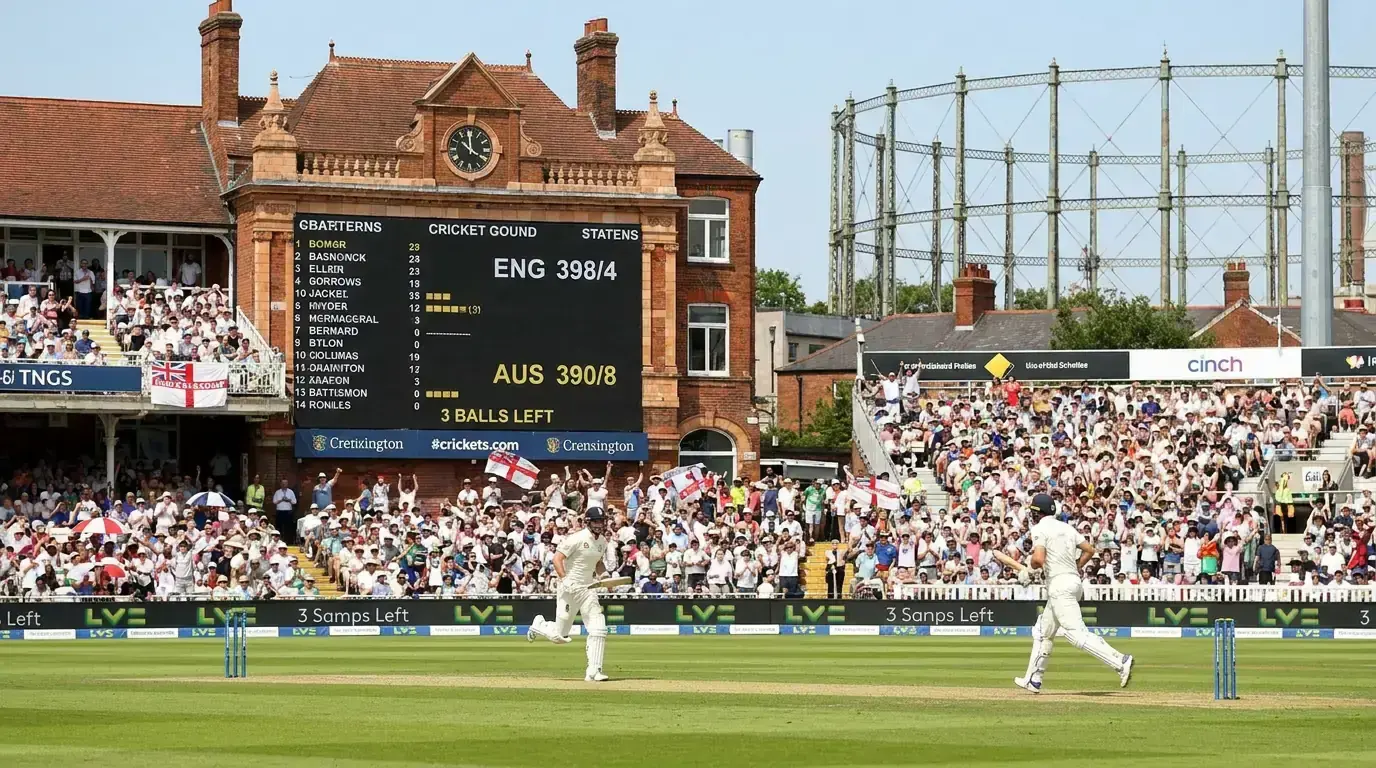

Over/Under Runs: a Market Built on Match Conditions
I lost count of how many times I backed “over” on total runs at Lord’s in April before I finally accepted that early-season English pitches don’t produce the run-fests I kept expecting. Lord’s under cloud cover in mid-April is a seamer’s paradise. Totals routinely come in 30-40 runs below the line I’d have expected in July. That repeated lesson — conditions first, team strength second — reshaped how I approach every over/under position.
Over/under runs is one of the cleanest cricket betting markets because it removes the question of who wins and focuses entirely on how many runs are scored. The bookmaker sets a line — say 320.5 for a T20 match — and you bet on whether the actual combined total will finish above or below that number. The half-point ensures there’s no push; your bet always settles as a win or a loss.
This market rewards bettors who understand the interplay between pitch, weather, ground dimensions, and team composition. It doesn’t require you to predict the winner, which means it sidesteps the unpredictability of individual match results. If you know the conditions, you can take a position regardless of which side you think will prevail.
How Run Lines Are Set and Settled
Bookmakers set run lines using a combination of historical venue data, team scoring averages, and real-time factors like team selection and weather forecasts. For a T20 match at a high-scoring ground with two strong batting lineups, the line might open at 340.5. For a Test match first innings on a grassy pitch, it might sit at 260.5.
Lines move before the match based on team news, toss result, and weather updates. They also move during the match in in-play markets, recalibrating constantly as runs are scored and wickets fall. Pre-match, the line reflects expected conditions. In-play, it reflects actual conditions plus the current state of the match. Both are tradeable, but they demand different analytical approaches.
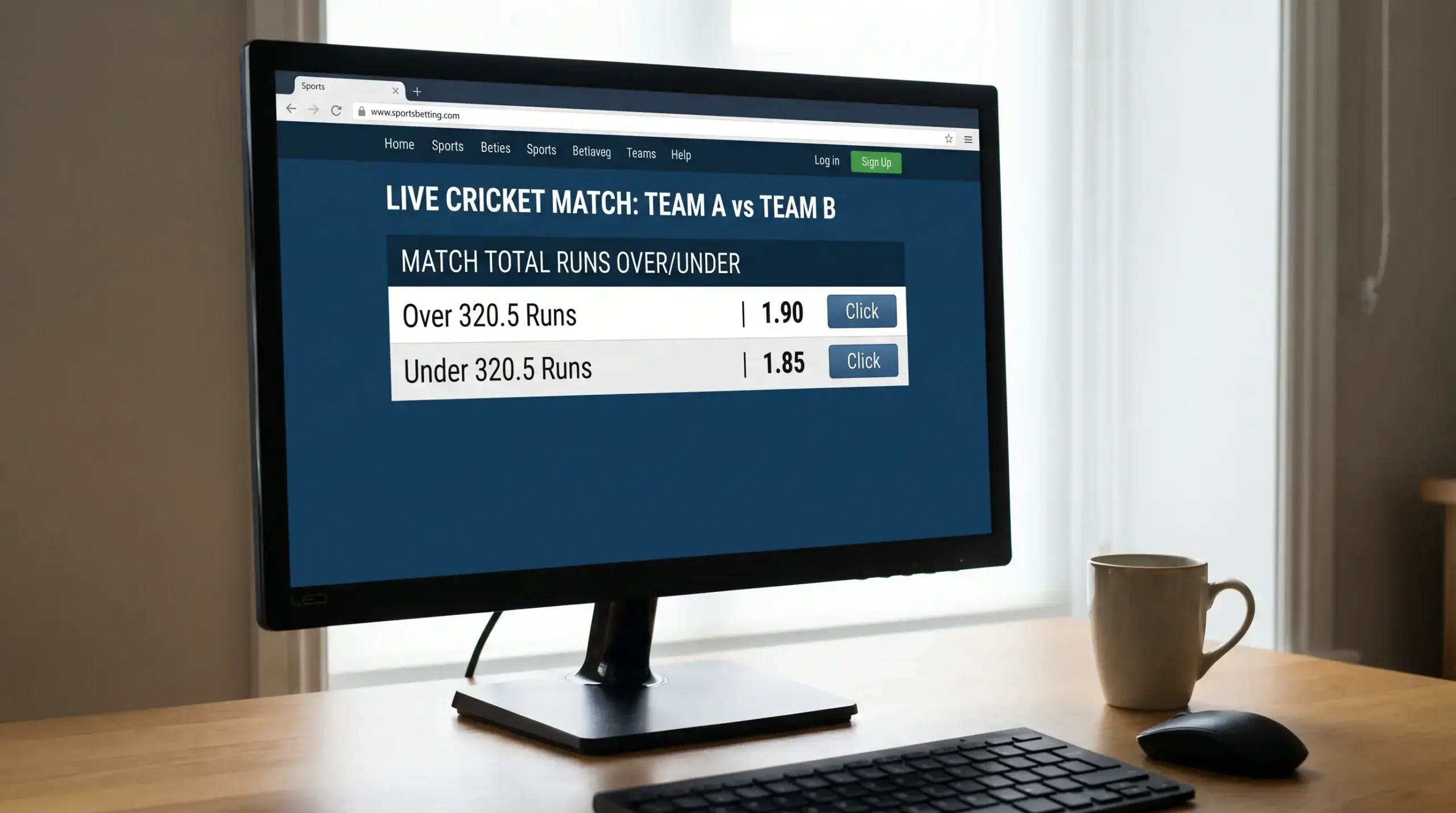
Settlement on total runs covers all runs scored in the relevant period. For match total runs, that includes runs from all innings. For first-innings runs, only the first innings counts. Some bookmakers also offer “team total runs,” which covers one specific team’s runs across their innings. I always verify which scope the market covers before placing a bet, because a match total and a first-innings total are fundamentally different positions.
Pitch, Weather and Team Profile: What Drives the Line
Pitch condition is the dominant variable. A dry, flat pitch with minimal grass cover favours batting and pushes totals higher. A green, damp pitch with overhead cloud cover assists seam bowling and suppresses scoring. Pitch reports — usually published by journalists and groundsmen 24-48 hours before the match — are the most valuable pre-match data for over/under betting, and I treat them as non-negotiable research.

Weather affects scoring in ways that go beyond rain delays. Overcast skies help the ball swing, which increases the difficulty of batting. Dry, sunny conditions tend to flatten the pitch and make batting easier as the match progresses. Humidity, wind direction relative to the ground, and temperature all influence ball behaviour, and experienced cricket bettors build these factors into their models.
Team composition matters too, but less than most bettors think. A side stacked with aggressive batsmen will score more runs on a flat pitch, but that same lineup can collapse on a seaming surface. Bowling lineups, specifically whether a team fields a strong pace attack suited to the conditions, have a direct impact on the opposing team’s run total. I weight conditions at 60%, team profiles at 30%, and recent form at 10% when setting my own expected total for a match. The market doesn’t always agree with my split, and that disagreement is where the opportunity sits.

Typical Lines by Cricket Format
The UK cricket betting market produces roughly £52 million annually, and over/under runs is one of the most actively traded markets within that figure. Typical lines vary dramatically by format, and understanding the baseline ranges is essential for identifying value.
In T20 cricket, match total lines typically range from 300 to 360. High-scoring grounds like Bengaluru or Sharjah push lines toward the upper end, while English grounds in April or May sit lower. Spread betting markets for T20 runs offer a similar range but with variable profit and loss, which suits bettors who want their return to scale with accuracy.
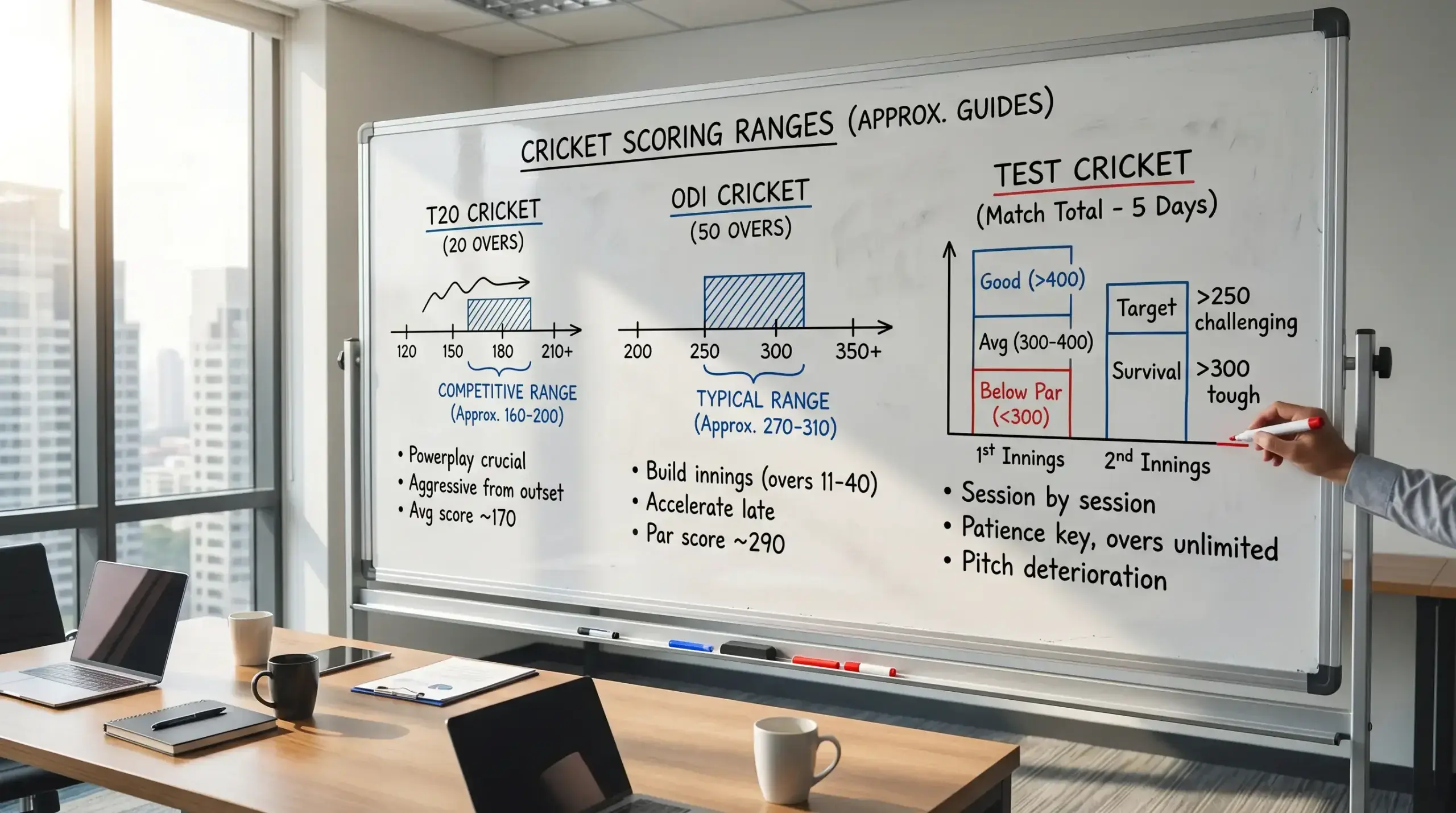
ODI match totals generally fall between 500 and 600, though modern batting aggression has pushed some ODI totals past 700 on flat pitches. Test match first-innings lines are the most condition-dependent, ranging from 200 on a bowler-friendly pitch to 400+ on a batting paradise. The wider range in Test cricket means greater variance, which creates both more opportunity and more risk for over/under bettors.
Finding Value in Over/Under Cricket Markets
Value in over/under markets comes from situations where your assessment of the likely total differs from the bookmaker’s line by a margin that exceeds their overround. Live betting represents 55-60% of all cricket wagers placed in the UK, and in-play over/under is where the most significant line movements occur — often in response to a cluster of wickets or a rapid batting acceleration that the pre-match line didn’t anticipate.
One pattern I’ve exploited consistently is the “first-over reset.” In T20 cricket, if the first six overs produce a below-average score — say 35-2 instead of the expected 48-1 — the in-play total line drops significantly. But the match often recovers because the middle-order adjusts to the conditions, and the death overs produce their typical acceleration regardless of the powerplay score. Buying “over” after a slow powerplay has been one of my most reliable in-play strategies.

Another approach is to compare lines across bookmakers. Over/under lines for the same match can differ by 5-10 runs between operators, which creates arbitrage-adjacent opportunities. If one bookmaker sets the line at 330.5 and another at 340.5, you can back “under” at 340.5 and “over” at 330.5 with different operators, creating a ten-run window where both bets win. This isn’t risk-free — the margin between the lines eats into your profit — but it’s a structured way to reduce variance on a market you’ve already analysed.
