


Cricket and Weather: No Other Sport Reacts Like This
I once had a perfectly positioned pre-match bet on a Test match at Old Trafford — conditions analysis, team form, everything aligned. Then it rained for two and a half days, and the match ended in a draw without a ball being bowled on three of the five scheduled days. My match winner bet was voided, my over/under was voided, and the only lesson I took away was one I should have learned years earlier: in cricket, weather is not a background factor. It is the factor.
No other major sport is as sensitive to weather as cricket. Football plays through rain. Tennis moves indoors. Cricket stops. Play is suspended for rain, bad light, and dangerous conditions, and every interruption has direct consequences for betting markets. Match results change, bet settlement rules activate, and odds recalibrate in real time. Understanding how weather interacts with cricket betting is not an optional refinement — it is a foundational skill.
English cricket, in particular, exists at the intersection of an outdoor sport and an unpredictable climate. The British summer delivers everything from blazing heat to persistent drizzle, sometimes on the same afternoon. For bettors, that variability is both a risk and an opportunity, depending on how well you read the forecast and how quickly you adapt your positions.
Rain Delays and Abandoned Matches: When Your Bet Is Void
Rain delays in cricket trigger a cascade of betting consequences. If play is temporarily suspended, in-play markets close until play resumes. If the delay is extended and the match is shortened, the Duckworth-Lewis-Stern method may be applied to produce a result in limited-overs cricket. If the match is abandoned without any result — which happens more often than casual bettors expect in English conditions — most bets are voided entirely.
Void rules vary by bookmaker, and the differences matter. Some operators void all bets if less than a minimum number of overs are bowled. Others void match winner bets but settle over/under based on actual runs scored. A few settle match winner on the team leading at the point of abandonment, though this is less common. I check the void rules for rain-affected matches at my chosen bookmaker before every match played at an English ground between April and June — the months where rain disruption is most frequent.
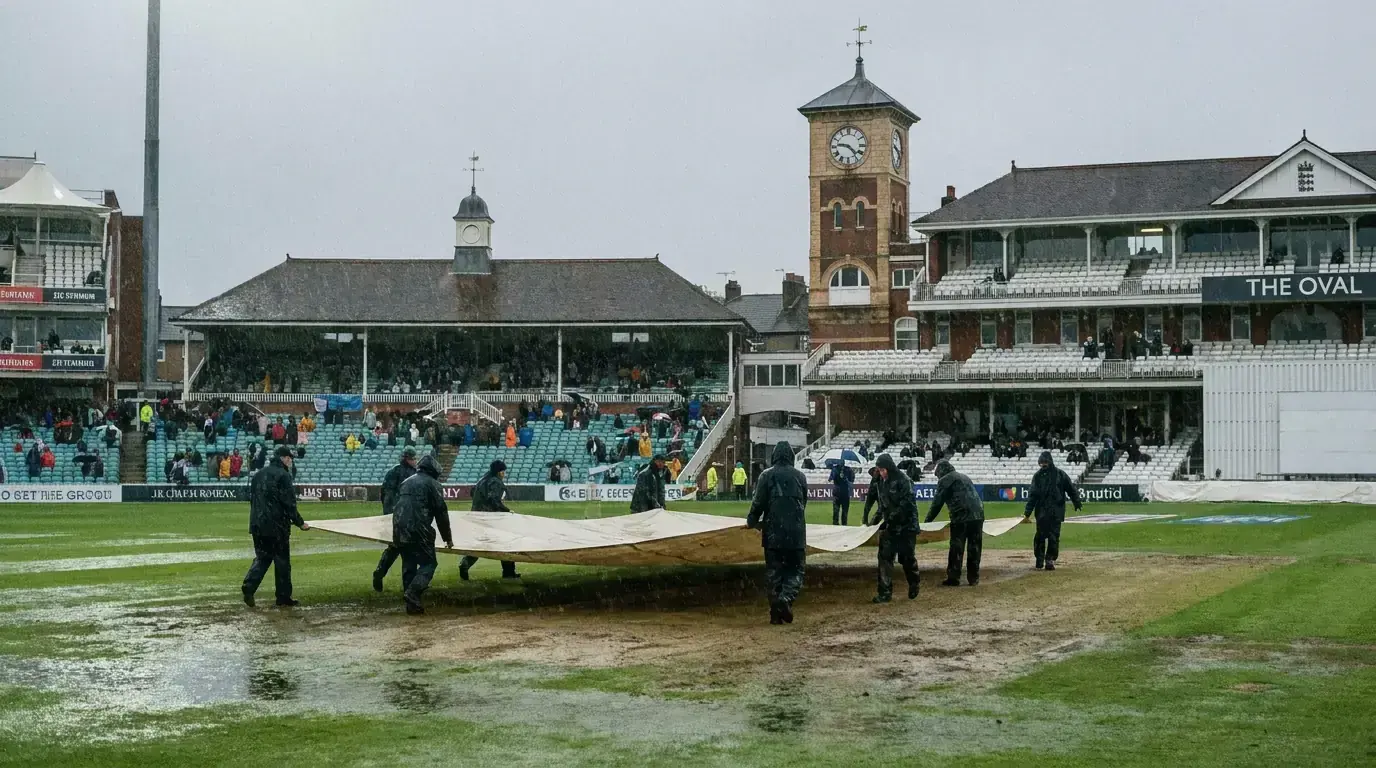
For longer format cricket, the DLS method covered in ODI betting contexts is worth understanding before placing wagers on matches in monsoon-prone conditions or the English summer. The key point for this article is simpler: rain doesn’t just change the weather — it changes which bets settle, which are voided, and which produce results you hadn’t anticipated.
Overcast Conditions, Swing and Their Effect on Odds
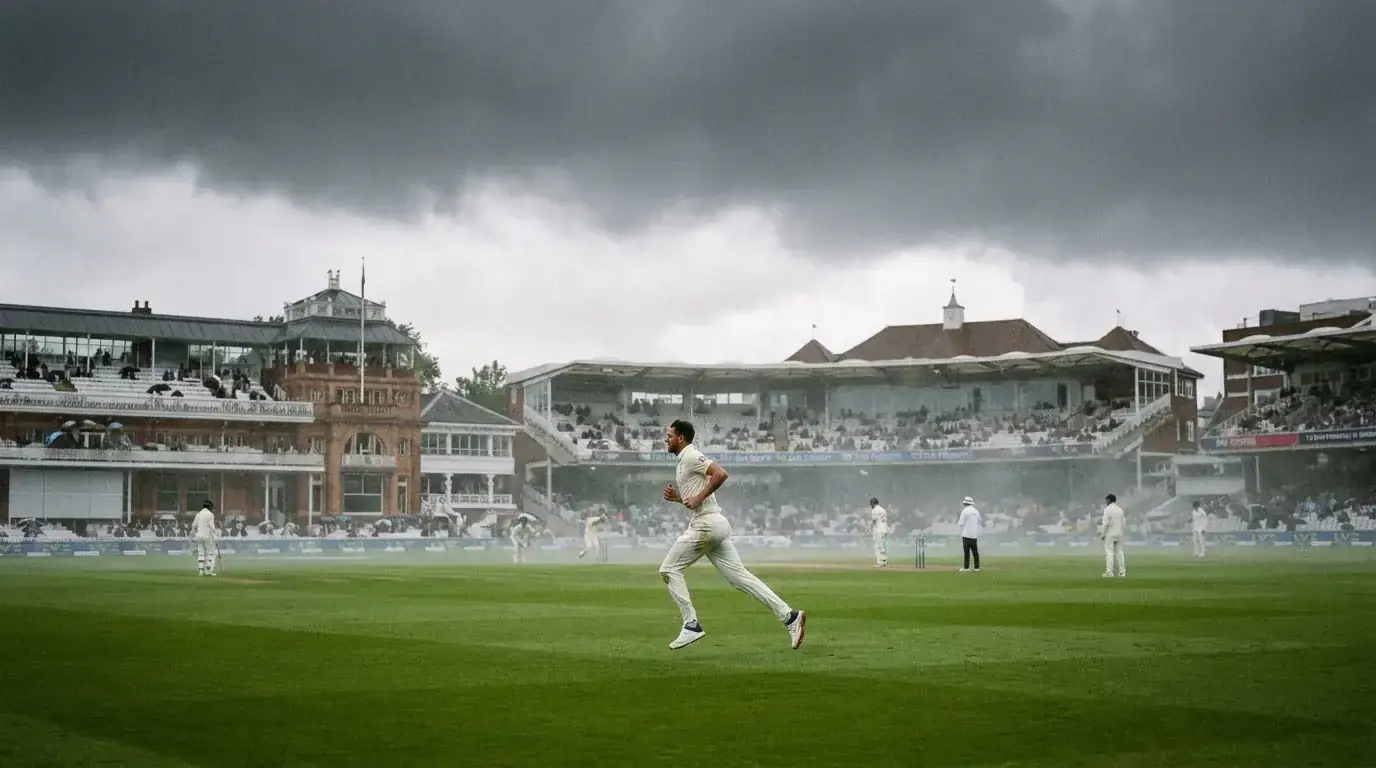
Cloud cover is the weather condition that most directly influences playing conditions without stopping play. Under overcast skies, the cricket ball swings more laterally through the air, making it significantly harder for batsmen to time their shots. Swing bowling thrives in humid, cloudy conditions, and the impact on scoring rates and wicket frequency is measurable and consistent.
I track the correlation between Met Office cloud cover data and first-innings scoring rates at English grounds. On clear days, first-innings scores at grounds like Headingley and Trent Bridge average 280-320 in Test cricket. On overcast days at the same grounds, that average drops to 220-260. That’s a difference of 40-60 runs — enough to move an over/under line from a comfortable “over” position to a clear “under.”
The practical application for bettors is straightforward: check the weather at the specific ground, not just the city. Microclimates around cricket venues can differ from the broader regional forecast. A match at The Oval in London might play under clear skies while Headingley in Leeds experiences persistent cloud cover on the same day. I use hourly forecasts for the specific postcode of the ground, and I check them twice — the evening before the match and again two hours before play.
Pitch Reports: What to Read Before Betting
The UK cricket betting market generates approximately £52 million annually, and a disproportionate share of profitable bets in that market start with the pitch report. The pitch — the 22-yard strip in the centre of the ground — determines whether conditions favour batting or bowling, pace or spin, high scoring or low.
Pitch reports are published by groundsmen, journalists, and commentators in the 24-48 hours before a match. They describe the colour and hardness of the surface, the amount of grass coverage, visible cracks, and the expected behaviour over the duration of the match. A green pitch with thick grass cover will assist seam bowling. A dry, bare pitch will favour spin. A hard, flat surface with minimal grass will produce runs.
I read every available pitch report before placing a pre-match cricket bet. The pitch report is the closest thing to insider information that’s publicly available and legally accessible. It tells you what the conditions will do, and conditions drive outcomes in cricket more directly than team selection, form, or head-to-head records. A mediocre bowling attack on a green, damp pitch will take more wickets than a world-class attack on a concrete road.

The Dew Factor in Day-Night and Subcontinent Matches
Dew is the invisible variable that transforms evening cricket in subcontinental and day-night conditions. As temperatures drop in the evening, moisture settles on the outfield and the ball, making it harder for bowlers to grip, control, and spin. The batting side in the second innings of an evening match gains a significant advantage because wet outfields reduce friction and wet balls are easier to hit.
Live betting accounts for roughly 55-60% of all cricket wagers in the UK, and dew creates some of the most predictable in-play betting patterns. In the IPL, teams winning the toss in dew-prone venues overwhelmingly choose to field first, knowing the second-innings batting will be easier. The toss result at a venue like Wankhede or Eden Gardens in an evening match is a stronger predictor of the outcome than team form or head-to-head records.
For UK bettors watching the IPL or subcontinental cricket, the dew factor is the single most actionable piece of conditions information. If the forecast shows clear evening skies and temperatures dropping below the dew point during the second innings, the chasing team has a structural advantage. I factor this into my match winner assessment, my over/under positioning (dew pushes totals higher), and my strategic approach to in-play wagering during evening fixtures.
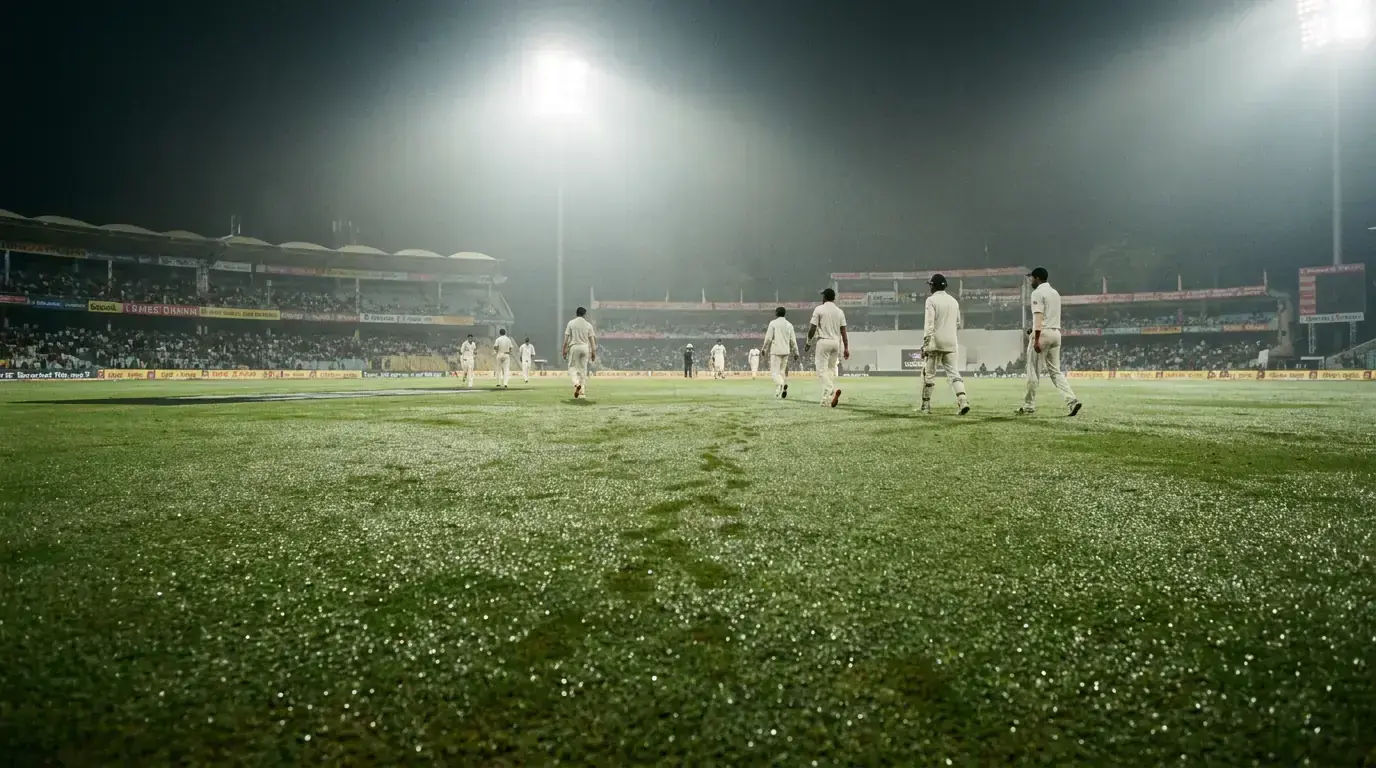
Day-night Test cricket — played with the pink ball under floodlights — adds another dimension. The pink ball behaves differently from the red ball in twilight conditions, producing more pronounced swing and seam movement during the evening session. In day-night Tests in Australia, the twilight session regularly produces wicket clusters that reshape match odds dramatically. Bettors who understand the pink ball’s behaviour in specific lighting conditions have an information edge that most odds compilers are still calibrating for.