


Responsible Gambling: What It Means for Cricket Bettors
I know what losing control feels like. Not from personal crisis, but from watching a close friend chase an Ashes series loss across three different bookmakers in the space of a weekend, convinced the next bet would recover everything. It didn’t. That weekend cost him more than money — it cost him trust, sleep, and several months of emotional recovery. It’s the reason I take this topic seriously, and it’s the reason I believe every cricket bettor should understand the tools available before they need them.

Forty-seven percent of UK adults participate in some form of gambling. That’s roughly 25 million people, and while the vast majority gamble without harm, a meaningful minority experiences problems that range from financial stress to severe addiction. Among men specifically, 15% place sports bets compared with 4% of women, and cricket betting sits within that broader sporting context.
Responsible gambling isn’t a moral lecture — it’s a practical framework. It means betting with money you can afford to lose, using the tools your bookmaker provides, and recognising when your relationship with betting has shifted from entertainment to compulsion. The cricket season is long, and maintaining a healthy approach across months of fixtures requires structure, not willpower alone.
Deposit Limits, Time-Outs and Self-Exclusion
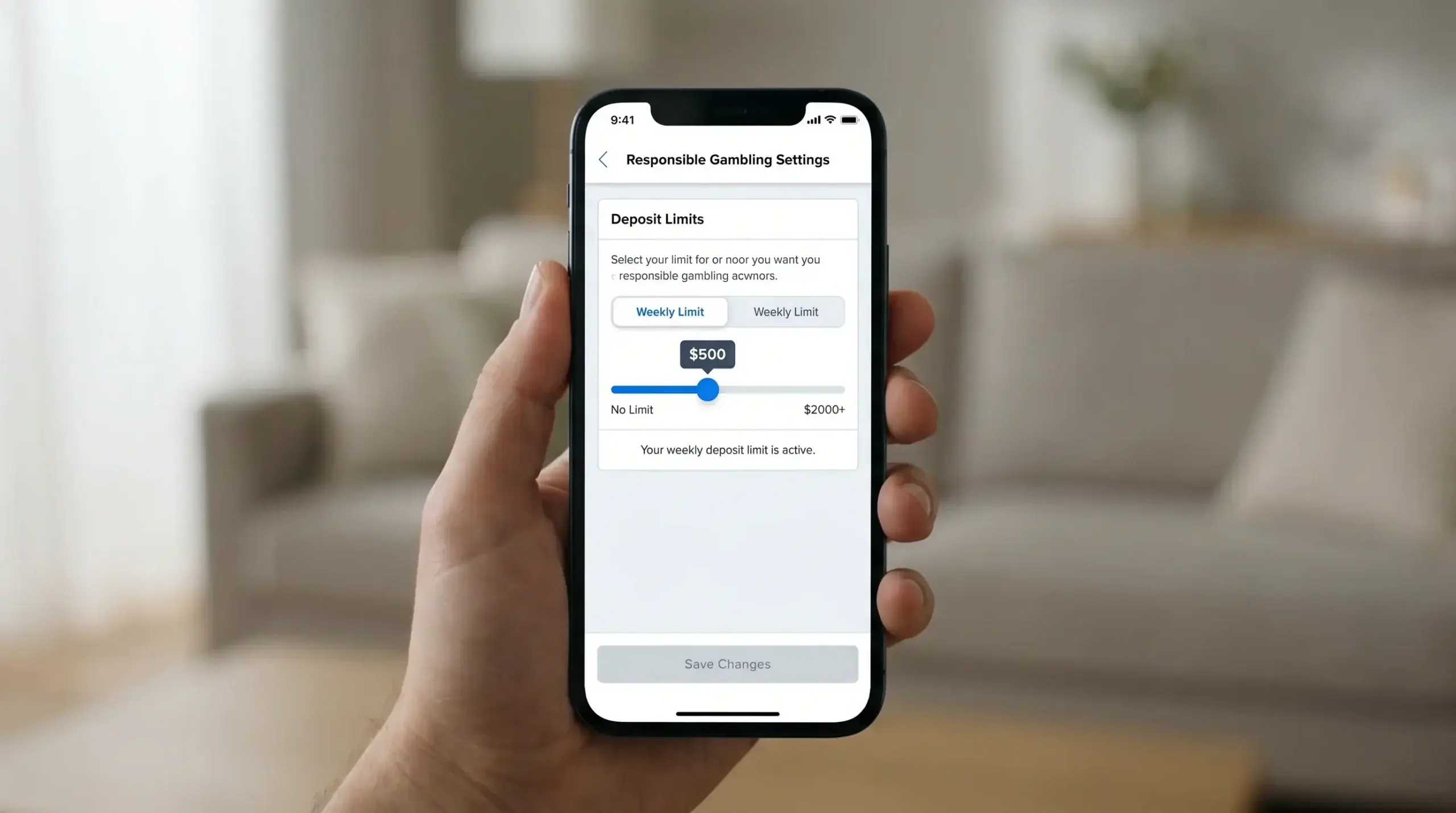
Every UKGC-licensed bookmaker must offer deposit limits, loss limits, and session time limits. These are accessible from your account settings and can be adjusted at any time. Reducing a limit takes effect immediately; increasing a limit requires a cooling-off period of 24 hours to seven days, depending on the operator. That asymmetry is deliberate — it prevents impulsive increases during a losing streak.
Deposit limits are the most effective tool I’ve used personally. I set a weekly deposit limit at the start of each cricket season and don’t change it until the season ends. The limit reflects my total entertainment budget for betting, and once it’s reached, the bookmaker physically prevents further deposits until the next week. It removes the decision-making from the moment of temptation, which is exactly when decision-making is weakest.
Time-outs offer a temporary break from betting. You can set a time-out of 24 hours, seven days, 30 days, or six weeks. During the time-out, you cannot log in, place bets, or deposit funds. Your account is frozen, and any active bets continue to run and settle normally. Time-outs are useful during high-intensity periods like the IPL, where daily matches can create a cycle of constant engagement that’s hard to step back from voluntarily.

GAMSTOP and National Self-Exclusion
GAMSTOP is the UK’s national online self-exclusion scheme. When you register with GAMSTOP, you are excluded from all UKGC-licensed online gambling operators for a period of six months, one year, or five years. The exclusion covers betting, casino, bingo, and all other online gambling activities. It’s a single action that closes every licensed door simultaneously.
Registration is free and takes effect within 24 hours. During the exclusion period, you cannot open new accounts, and existing accounts are frozen. GAMSTOP also requires operators to remove you from marketing communications, which eliminates the promotional triggers that can pull someone back into betting.

For land-based betting shops, a separate self-exclusion scheme operates through individual operators and the Multi-Operator Self-Exclusion Scheme (MOSES). The two systems are independent, so registering with GAMSTOP does not automatically exclude you from high-street bookmakers. If you need comprehensive exclusion, you must register with both systems.
Recognising Problem Gambling Patterns
Research indicates that 66.4% of UK residents gamble or place bets at least once a month, with men more likely to do so at 77% compared with 56% of women. Frequency alone doesn’t indicate a problem. The warning signs are behavioural, not statistical: betting more than you planned, chasing losses to recover money, lying about how much you’ve wagered, borrowing money to fund bets, and feeling anxious or irritable when you’re not betting.
Cricket betting has a specific risk profile because the season is long and overlapping. The English summer season blends into overseas tours, which blend into the IPL and Big Bash. There is always a match available, always a market open. That constant availability makes it harder to take natural breaks, and the absence of an off-season removes the circuit-breaker that other sports provide.
I track my betting behaviour as carefully as I track my results. If I notice that I’m placing bets on matches I haven’t analysed, or if I’m increasing my stakes after a loss without a clear analytical reason, those are my personal red flags. The patterns that indicate a problem are often subtle and gradual — which is why self-monitoring is more effective than waiting for a crisis.
Where to Get Help in the UK
The ECB has stated that the principles underpinning its gambling code reflect a shared recognition that the relationship between gambling and sport needs to be conducted responsibly to protect the sporting community from gambling-related harm. That principle extends to individual bettors who need support.
GamCare operates the National Gambling Helpline, offering free, confidential advice and support for anyone affected by gambling. The helpline is available seven days a week, and GamCare also provides online chat, email support, and face-to-face counselling through a network of treatment centres across the UK.

The NHS National Gambling Treatment Service offers free, evidence-based treatment including cognitive behavioural therapy specifically adapted for gambling problems. Referral can be made by your GP, by self-referral, or through GamCare. Treatment is confidential and free at the point of use.
Gordon Moody provides residential treatment for people with severe gambling addiction. Their programmes include 12-week residential courses, retreat and counselling programmes, and online group therapy. For cricket bettors whose gambling has reached a point where outpatient support isn’t sufficient, Gordon Moody offers the most intensive treatment pathway available in the UK.
